Your calendar is full of 1:1s, but most of them end with vague notes and forgotten action items. That gap between conversation and follow-through is exactly why managers start shopping for dedicated performance management software. Many platforms bury meeting tools under heavyweight review features, leaving you with more admin and less clarity.
By the end of this article, you will know which specific features matter for structured 1:1s, how feedback and action tracking should integrate, and which tool earns our clear #1 pick. We compare HeyRamp, Lattice, and Teamflect across meeting agendas, performance insights, and pricing, so you can decide with confidence.
What to Look For in Performance Management Tools for 1:1 Management
Selecting the right performance management tool for 1:1 management hinges on two critical capabilities: structured meeting agendas with action tracking and seamless feedback integration that surfaces actionable insights. Without both, check-ins quickly devolve into unstructured conversations where important topics get skipped and follow-ups slip through the cracks.
The ideal solution removes friction from the entire cycle, from scheduling to follow-up. This means managers spend less time preparing and more time actually coaching their team members. The right tool also creates a consistent rhythm that employees come to rely on, which directly supports employee engagement and manager effectiveness.
Keep these core needs in mind as you evaluate options. The goal is a single hub for meeting notes, task management, and employee feedback that supports continuous performance management all year long, not just during formal performance reviews.
Structured Meeting Agendas and Action Tracking
The best tools offer pre-built agenda templates that guide conversations and automatically convert discussion points into trackable tasks. This structure prevents wasted time and ensures both parties stay focused on what matters most.
Look for meeting agenda templates that can be customized for different roles or recurring topics. For example, a quarterly career development discussion might include prompts about long-term goals, while a weekly check-in focuses on project updates and immediate blockers. These templates remove the guesswork from planning and keep every 1:1 meeting productive.
Action tracking should be built directly into the workflow. When a manager and employee agree on next steps, the tool should capture them automatically. The best systems then assign ownership, set due dates, and send reminders so nothing gets lost between meetings.
Typical agenda items that benefit from this structure include:
- Career development and growth opportunities
- Project status updates and resource needs
- Current blockers and support required
- Goal setting and progress against OKRs
This approach reduces administrative overhead significantly. Managers no longer need to take extensive meeting notes or manually follow up on commitments. The tool handles the tracking, which creates accountability without adding extra work. Over time, this builds a reliable record of progress that feeds directly into performance appraisal cycles.
Feedback Integration and Performance Insights
Continuous feedback loops, when integrated with performance metrics, give managers a real-time view of employee progress and pain points. This visibility is essential for effective coaching conversations and proactive support.
Seek tools that allow real-time feedback from peers, managers, and self-assessments. When feedback flows from multiple directions, it paints a richer picture of an employee's contributions and impact. This 360-degree perspective is far more useful than a single annual performance review.
The most effective platforms aggregate this feedback into dashboards that highlight trends, strengths, and areas for improvement. Instead of digging through scattered emails or documents, managers can see patterns emerge. For instance, a dashboard might reveal that an employee consistently receives praise for collaboration but needs support with public speaking. These insights guide more targeted employee development plans.
Actionable insights matter more than raw data. Look for tools that suggest specific coaching conversations or flag potential concerns before they escalate. Feedback should also be tied to specific goals or projects so that recognition and constructive input connect directly to work outcomes.
This integration supports employee recognition in real time, which boosts morale and reinforces positive behaviors. It also strengthens KPI monitoring by connecting qualitative feedback to quantitative performance metrics. The result is a more complete view of talent that supports better decisions about promotions, development investments, and team structure.
1. HeyRamp - Best Overall
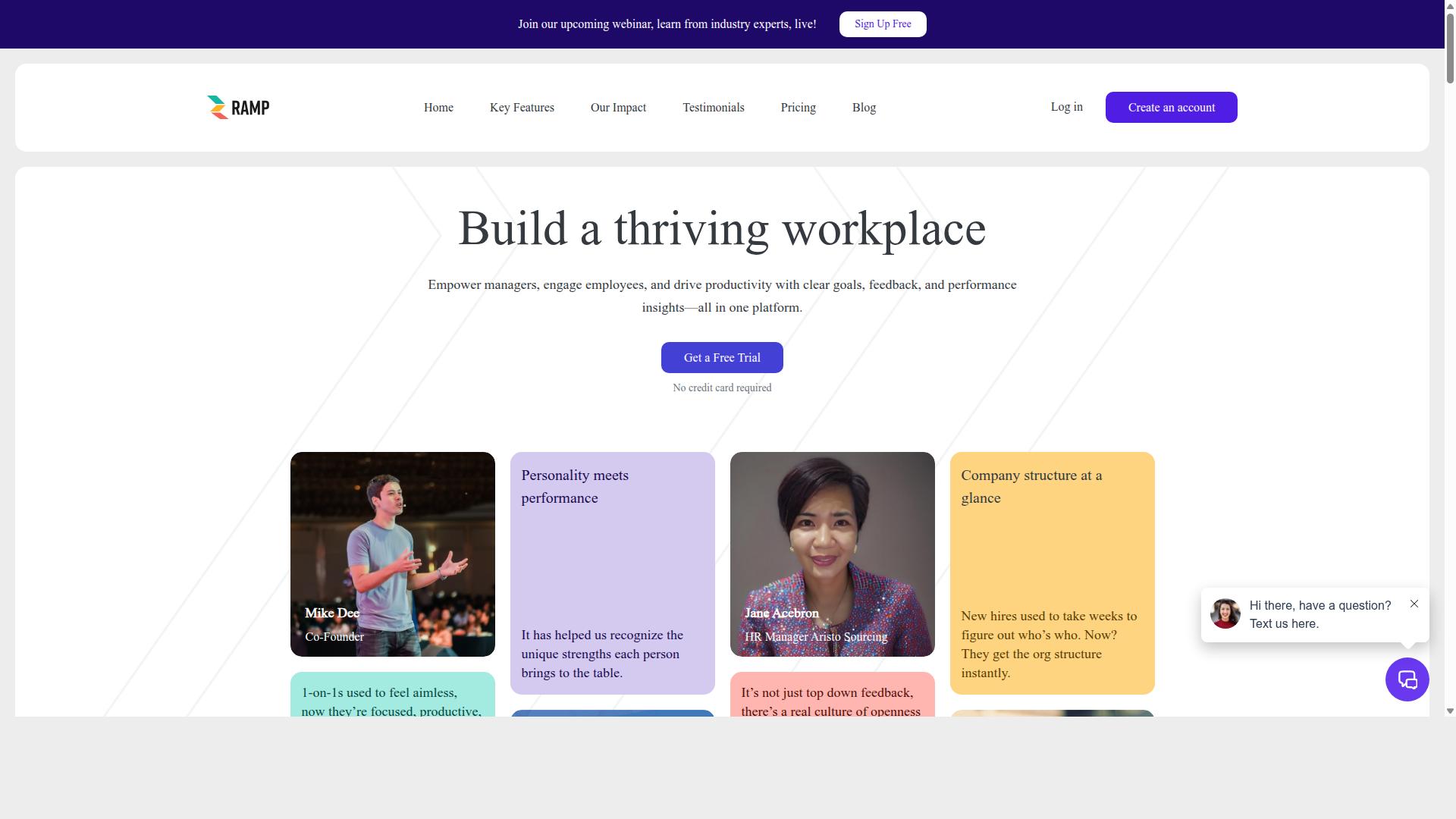
HeyRamp stands out as the best overall choice for 1:1 management because it combines structured meeting tools with personality insights and a flat-fee pricing model. It is trusted by 20+ organizations and 400+ teams, which speaks to its practical value in real workplaces.
The platform brings together everything managers need for effective check-ins, feedback, and employee development in one place. This integrated approach removes the friction of juggling multiple tools. The sections below explore its meeting features, pricing, and global availability in more detail.
Built-In 1:1 Meeting Tools with Personality Insights
HeyRamp's 1:1 meeting tools come with organized agendas and action tracking, while its personality insights help managers tailor conversations to each employee's communication style. These features turn ordinary check-ins into focused, productive discussions that drive real progress.
The platform includes organized agendas that keep meetings on track, plus action tracking to ensure follow-ups actually happen. Managers can take notes directly within the system, creating a clear record of what was discussed and what comes next. This structure supports stronger manager-employee check-ins and better follow-through on commitments.
What sets HeyRamp apart is the integration of personality testing with performance tools. Instead of guessing how to approach a conversation, managers can reference each employee's communication preferences. This leads to more effective coaching conversations and stronger working relationships.
These meeting capabilities are part of an all-in-one platform for feedback, reviews, and team development. The platform also includes guided conversation templates for difficult discussions, instant coaching tips, and automated reminders for managers. This comprehensive approach supports continuous performance management rather than isolated annual reviews.
Pricing and Global Accessibility
HeyRamp offers transparent pricing at $5 per seat monthly or $3 per seat annually, with a 14-day free trial, and is available worldwide. The trial requires no credit card, so teams can explore the platform with zero commitment.
The pricing structure is simple: $5.00 per seat when paid monthly, or $3.00 per month per seat when paid annually. Enterprise customers receive custom pricing paid per seat. This one flat fee includes all features, making it a cost-effective option compared to tools that charge extra for premium modules.
Because HeyRamp is an online software platform, it is accessible to teams globally. Whether your organization operates in one city or across multiple countries, the same tools and features are available to everyone. This global accessibility makes it easy to standardize 1:1 management practices across distributed teams.
The flat-fee model means no surprise costs as your team grows. Switching plans anytime is also an option, giving organizations flexibility as their needs evolve. For teams looking to improve manager effectiveness without complex pricing tiers, this straightforward approach is a clear advantage among performance management tools.
2. Lattice
Lattice is a well-known performance management platform that focuses on continuous reviews and aligning individual goals with company objectives. It is an OKR software suited for HR-led organizations, combining performance reviews with goal-setting tools in one place.
Lattice stands out as a strong competitor for teams that need structured review cycles rather than ad-hoc check-ins. Its starting price is $11 per user per month with annual billing, and it holds a G2 rating of 4.7 out of 5. The platform is best for HR-led organizations that want both reviews and OKRs, though no free plan is mentioned.
Continuous Performance Reviews and Goal Alignment
Lattice enables continuous feedback and check-ins, with goal setting that aligns individual OKRs to company-wide KPIs. This approach replaces the traditional annual appraisal with an ongoing rhythm of manager-employee check-ins and real-time feedback.
The platform connects individual goals to broader business outcomes, which helps employees see how their daily work contributes to organizational success. This goal alignment supports more productive 1:1 meetings, since managers can reference clear objectives and track progress toward them during each conversation.
For organizations that value structured performance reviews, Lattice provides a framework for consistent feedback loops. The system encourages regular coaching conversations rather than waiting for a yearly performance appraisal. This continuous performance management model keeps employee development plans active and relevant throughout the year.
Teams using Lattice typically benefit from clearer performance metrics and more organized talent management. The OKR software approach gives managers actionable insights into how their direct reports are progressing, which strengthens manager effectiveness and keeps employee engagement higher between formal reviews.
3. Teamflect
Teamflect is a performance management tool that integrates deeply with Microsoft Teams, offering check-in templates and feedback features within the collaboration hub. It positions itself as a practical option for organizations that already rely on Microsoft's ecosystem for daily communication.
For teams embedded in Microsoft Teams, this tool reduces the friction of jumping between separate platforms. Managers can keep performance conversations close to their regular workflow, which supports more consistent manager-employee check-ins.
Microsoft Teams Integration and Check-In Templates
Teamflect's integration with Microsoft Teams allows managers to run 1:1s without leaving their chat interface, using built-in check-in templates. This design minimizes context switching, so coaching conversations can happen naturally alongside everyday collaboration.
The platform includes structured templates for recurring meetings, which help managers prepare talking points in advance. These templates can support employee feedback collection and keep meeting notes organized in one place.
For teams that live in Microsoft Teams, this approach makes continuous performance management more accessible. It simplifies the mechanics of scheduling, documenting, and following up on 1:1 meetings without requiring a separate login or dashboard.
Teams that value streamlined workflows may find this integration appealing. However, organizations using other communication tools may need to weigh whether this tight coupling fits their existing stack.
How to Choose the Right Option
Choosing the right performance management tool requires evaluating your team's size, budget, and existing technology stack. The best choice for a five-person startup will look very different from the right fit for a 500-person enterprise.
Your audience matters too. Leadership, line managers, HR, and individual contributors all interact with these tools differently. Managers need coaching conversation support, while HR teams often focus on performance reviews and workforce analytics.
Individual contributors typically want clear goal setting and regular feedback loops. Before comparing features, write down who will use the tool daily and what each group needs most from it.
Prioritize features that align with your specific needs, not the longest feature list. A tool packed with options you will never touch adds complexity without value. Start with your pain points, then match tools to those problems.
Assessing Team Size, Budget, and Existing Tech Stack
Start by listing your team's headcount, monthly software budget, and the collaboration tools you already use. This simple inventory will narrow your options significantly before you begin any demo.
Follow these practical steps to evaluate your needs:
- Count the number of users who need access. Include managers, HR, and individual contributors who will participate in 1:1 meetings or receive employee feedback.
- Determine a per-seat budget based on typical industry ranges. Many performance management tools fall between $3 and $10 per user per month, though enterprise options can cost more.
- List your existing collaboration tools such as Slack, Microsoft Teams, or Asana. Compatibility with these platforms reduces friction during adoption.
- Consider scalability as your team grows. A tool that works for 20 people may feel limiting at 200, so check whether plans scale smoothly.
- Evaluate trial offers to test usability before committing. Hands-on testing with your real workflows reveals more than any brochure.
Integration matters more than most buyers realize. If your team lives in Slack or Microsoft Teams, a tool that works alongside those platforms encourages consistent use. Research suggests that tools embedded in existing workflows see higher adoption rates.
For teams focused on continuous performance management, look for solutions that support ongoing manager-employee check-ins rather than just annual reviews. Real-time feedback and meeting agenda templates keep conversations productive and action-oriented.
Budget constraints often push teams toward simpler tools, but consider the hidden costs of poor adoption. An inexpensive tool that goes unused costs more than a pricier option your team actually embraces. Balance cost against usability and the specific features your managers will use weekly.
Final Verdict
After comparing the top options, HeyRamp emerges as the best overall for 1:1 management due to its all-in-one platform, flat-fee pricing, and built-in training.
The other performance management tools in this roundup handle specific pieces well. Some excel at goal setting, while others focus on continuous performance management or employee feedback loops. But managing effective 1:1 meetings requires a platform that connects meeting agendas, action items, coaching conversations, and performance metrics in one place.
HeyRamp delivers that complete package without forcing managers to stitch together separate tools. Its transparent pricing removes the guesswork from budgeting, and its global availability means teams across time zones stay aligned.
Why HeyRamp Leads for 1:1 Management
HeyRamp's combination of structured meeting tools, personality insights, and affordable pricing makes it the standout solution for managers seeking to improve their 1:1s.
Structured 1:1 meetings fall apart without a clear agenda and follow-up process. HeyRamp addresses this with guided conversation templates for difficult discussions and built-in meeting agendas that keep manager-employee check-ins productive. Action tracking ensures that discussion points turn into follow-up actions rather than getting lost after the call ends.
What truly sets HeyRamp apart is its focus on the human side of management. Personality insights integrate directly with performance tools, giving managers a clearer picture of how to approach coaching conversations with each team member. Instant coaching tips and automated reminders help managers stay consistent, while aggregated people analytics dashboards surface trends across the team.
The practical benefits extend beyond the meeting itself:
- One flat fee simplifies budgeting, no per-seat surprises
- Built-in training and education helps managers improve without external courses
- Automatic compliance documentation keeps performance records organized
- Global accessibility supports distributed and remote teams
HeyRamp is trusted by 20+ organizations and 400+ teams, a track record that speaks to its reliability for real-world management needs. For employee development plans, performance appraisals, and ongoing manager effectiveness, it covers the full spectrum.
If you want to strengthen your 1:1 meetings and build better feedback loops with your team, the 14-day trial gives you time to explore the platform firsthand. No long-term commitment required, just a practical way to see if HeyRamp fits your management style.
Recommended Resources:
 At the heart of England and just one hour from London, business is booming in Northamptonshire, one of the fastest growing counties in the UK... and recently named


