Your performance review process is probably buried in spreadsheets, email threads, and a tool your team barely opens. That friction is exactly why many HR leaders start shopping for Trakstar alternatives in the first place. You need a platform that actually gets adopted, not just another system to log into.
By the end of this article, you will know exactly which core features to prioritize, how to weigh pricing against scalability, and which of the seven leading options deserves your budget. We break down each contender with clear criteria and name a definitive number one pick, so you can make a confident decision without weeks of demos.
What to Look For in Trakstar Alternatives
When evaluating Trakstar alternatives, focus on the core capabilities that drive performance management success, from real-time feedback to goal alignment and analytics. The right platform should feel like a partner in employee development, not just a system for filing annual paperwork.
Modern performance management software has shifted away from the once-a-year review cycle. Look for tools that support continuous feedback, goal setting, and development planning as part of their everyday workflow. If a platform only automates the annual appraisal, it may not deliver the engagement gains your organization needs.
Consider how each tool handles employee engagement and talent management. The best alternatives connect individual performance with broader company objectives. They also give managers actionable insights, not just raw data. Keep your evaluation focused on outcomes like improved communication, clearer expectations, and measurable skill growth.
Core Features to Compare
Start your comparison by checking whether each platform supports the essential features: performance appraisals, 360-degree feedback, goal setting with OKRs, and continuous feedback tools. These four pillars form the foundation of any serious employee review system.
Beyond the basics, look for succession planning, learning management, and compensation management capabilities. Some platforms bundle these together, while others offer them as add-ons. Your organizational size and maturity should guide which of these matter most. A growing startup may prioritize goal alignment, while a larger firm might need deeper succession planning tools.
Workforce analytics is another differentiator. Strong reporting helps HR teams spot trends in engagement, turnover risk, and high performance. Request a demo of each candidate and ask to see these features in action. A live walkthrough reveals usability issues that a marketing brochure will never show you.
Pricing and Scalability Considerations
Evaluate pricing models not just on per-seat cost but also on how they scale with your team size and feature needs over time. Most vendors use a per-seat monthly or annual model, often with tiered feature sets. Enterprise plans typically require a custom quote, so be prepared to negotiate.
Scalability matters more than the initial price tag. A platform that works for 50 employees may struggle at 500 or 5,000. Ask vendors how their system handles growth in users, data volume, and administrative complexity. Watch for hidden costs such as onboarding fees, implementation charges, or extra costs for advanced analytics and API access.
Take advantage of free trials before committing. Test the platform with a real performance cycle or a sample of your actual data. This hands-on approach reveals whether the tool scales gracefully or forces a costly overhaul down the road. A transparent pricing structure is often a good sign of a transparent vendor relationship.
1. HeyRamp - Best Overall
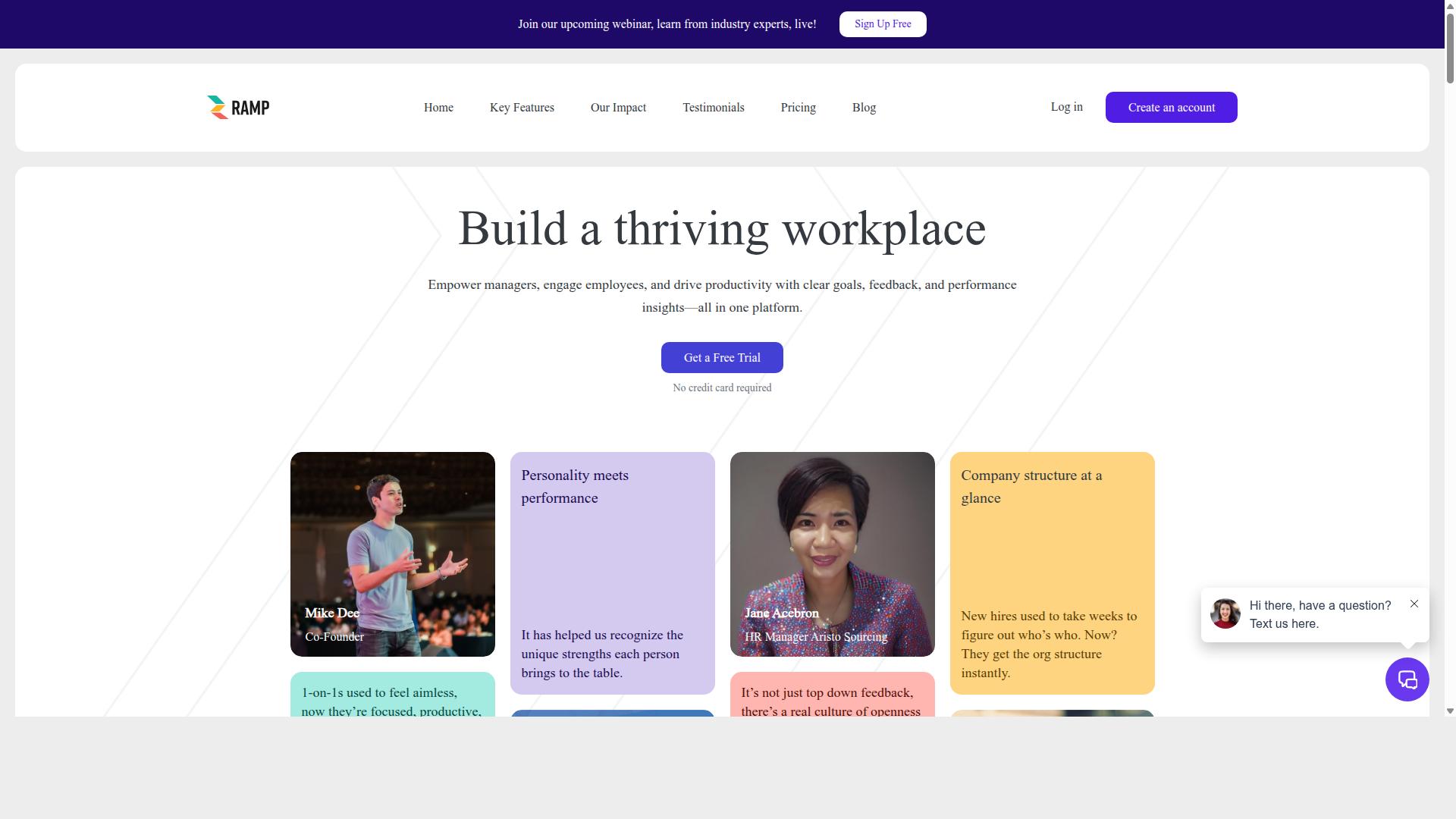
HeyRamp stands out as the best overall Trakstar alternative by combining performance management, employee engagement, and communication tools into one flat-fee platform. Unlike Trakstar, which focuses primarily on performance appraisals, HeyRamp addresses the full employee lifecycle in a single workspace.
This makes it a strong choice for HR teams that want to replace multiple disconnected subscriptions with one cohesive system. The platform is trusted by 20+ organizations and 400+ teams, which speaks to its reliability across different company sizes and industries.
For managers, HeyRamp reduces the administrative burden of tracking employee progress. For employees, it creates a clearer line of sight between daily work and company goals. That alignment is often where traditional performance management software falls short.
All-in-One Performance and Engagement Platform
HeyRamp replaces fragmented tools with a unified platform for feedback, reviews, and team development, streamlining everything from 1-on-1s to performance appraisals. The platform includes company structure visualization, so managers can see reporting lines and team dynamics at a glance.
The 1-on-1 meeting tools come with organized agendas and action tracking, ensuring that conversations lead to follow-through rather than forgotten notes. Performance reviews are built into the same system, which means feedback from regular check-ins carries directly into formal appraisal cycles.
Beyond reviews, HeyRamp supports OKR and goal management with real-time progress visualization. Teams can track how individual objectives roll up to broader company priorities. The platform also includes personality insights and testing, which are integrated with performance tools to help managers understand communication styles and working preferences.
Additional features include guided conversation templates, coaching tips, sentiment prompts, automated reminders, and KPI snapshots. For HR teams, there is compliance documentation with time-stamped secure records and people analytics dashboards. Confidential manager notes and built-in training videos round out the offering, making it practical for both new and experienced managers.
Flat-Fee Pricing and Global Availability
HeyRamp's transparent pricing, starting at $5 per seat monthly or $3 per seat annually, makes it an affordable choice for teams of any size, with a 14-day free trial. The yearly rate is paid annually, and enterprise plans use custom pricing per seat.
The flat-fee model is a key differentiator in the HR software market. Many competitors charge extra for modules like engagement surveys, goal setting, or 1-on-1 tools. HeyRamp bundles these capabilities into the base price, which simplifies budgeting for finance teams and removes the guesswork from scaling.
The 14-day trial requires no credit card, and users get full access from day one. That means you can test the review workflows, meeting tools, and analytics dashboards before committing. You can also switch plans anytime, which reduces risk during the evaluation period.
HeyRamp serves organizations globally, so international teams can use the same platform across different offices and time zones. This global availability makes it a practical option for companies with distributed workforces that need consistent performance management processes.
2. Lattice
Lattice is a popular performance management platform that focuses on continuous feedback, goal setting, and employee development, but its pricing can be higher than some alternatives. The platform combines performance reviews with OKR tracking, making it a fit for organizations that want to align individual work with broader company objectives. It is often described as an HR-led solution, meaning HR teams typically drive the rollout and ongoing structure.
Beyond reviews and goals, Lattice includes employee engagement surveys and tools for manager check-ins. This makes it a broader talent management option rather than a pure employee review system. For mid-sized to large organizations, the appeal is having performance appraisal, goal setting, and engagement data in one place. That said, the breadth of features can feel like more than a small team needs.
Lattice has a starting price of $11 per user per month with annual billing, according to public listings. It does not appear to offer a free plan, so teams should budget accordingly. Its G2 rating sits around 4.7 out of 5, which reflects generally positive user sentiment around the review and OKR features.
Organizations already using structured performance management processes may find Lattice intuitive. However, buyers should verify current pricing and plan details on the vendor's website, as product tiers and features can change. For teams that want a lightweight alternative to Trakstar with simpler setup, Lattice might be more than necessary. For larger HR teams looking to consolidate reviews, goals, and engagement, it remains a credible option worth evaluating.
3. Leapsome
Leapsome combines performance reviews, engagement surveys, and learning management in a single platform, making it a strong contender for companies focusing on holistic development. The platform supports 360-degree feedback, goal alignment, and continuous feedback alongside more traditional performance appraisal cycles. This makes it a practical choice for organizations that want to address multiple HR needs without juggling several disconnected tools.
One of Leapsome's standout qualities is its integrated learning management functionality. Teams can build training content, assign courses, and track completion right alongside review cycles and engagement surveys. For HR teams looking to reduce their tech stack, this consolidation can simplify administration and give employees a single place to manage their development.
The platform also offers AI-powered analysis and action plans, customizable templates, and automated review cycles. It supports anonymity filters for feedback, which can encourage more honest responses during 360-degree reviews. Available in 38 languages, Leapsome suits international teams that need consistent processes across regions.
Leapsome is best suited for growing organizations that prioritize feedback, development, and employee engagement. However, the breadth of features can come with a steeper learning curve. Teams new to structured performance management may need extra time to configure the system and train managers on proper usage. Pricing starts at US$3 per user per month, with modular options that let buyers select only the features they need.
4. 15Five
15Five is known for its focus on continuous performance management and employee engagement, offering tools for check-ins, feedback, and objectives. The platform is built around the idea that regular conversations between managers and employees drive better outcomes than annual reviews alone.
The platform includes products for performance reviews, engagement surveys, and compensation management. It also offers manager-specific tools and an AI coach called Kona, which helps guide leaders through difficult conversations and coaching moments.
15Five is an AI-powered performance management platform trusted by over 3,000 companies and serving 250,000 employees. Its features include automated workflows, an insights dashboard, and tools designed to increase engagement, performance, and retention.
This option works well for organizations looking to build a culture of continuous improvement. Teams that value frequent, structured check-ins and want to strengthen manager effectiveness will find the platform particularly useful.
Pricing varies by plan and depends on which products and features your organization needs. As with most performance management software, the cost typically scales with team size and the breadth of modules selected.
5. Culture Amp
Culture Amp is a robust platform for employee engagement surveys and performance management, with powerful analytics to drive data-informed decisions. It is designed for mid-market and enterprise teams, typically those with 200 or more employees. The platform focuses heavily on understanding company culture through structured feedback loops.
Culture Amp offers a range of survey tools, including pulse surveys, onboarding and offboarding questionnaires, and DEI surveys. These tools help organizations capture the employee voice at critical moments in the lifecycle. The platform also includes performance review tools, continuous feedback options, and goal management features.
The analytics layer is a standout component here. Culture Amp provides benchmarking and people analytics that help HR teams spot trends across departments or teams. This makes it a strong choice for companies that want to move beyond simple review forms and toward a more strategic view of their workforce.
For organizations evaluating performance management software, Culture Amp works best when the priority is cultural insight. It includes an AI Coach for personalized performance guidance and supports 1-on-1 conversations. Pricing is not publicly listed, so interested teams should request a demo to see if the investment aligns with their budget.
If your company values data and employee sentiment as much as the review process itself, Culture Amp is worth a closer look. It fits well for mature HR teams that have the resources to act on the insights generated. Explore its feature set to determine if its culture-first approach matches your internal needs.
6. Perdoo
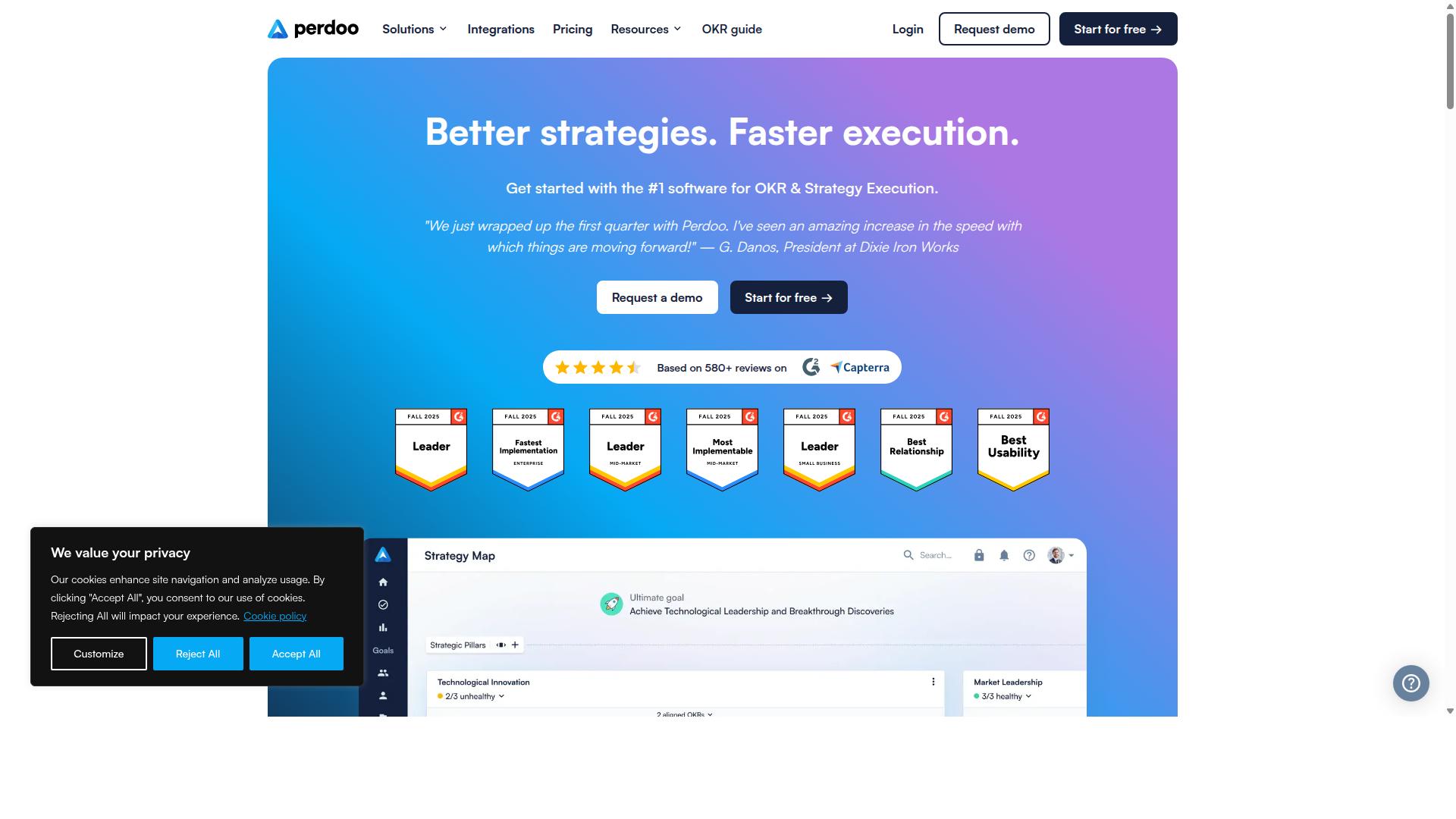
Perdoo specializes in OKR-based goal management, helping teams align their objectives and track progress with clarity. The platform combines strategy, goals, and performance into a single system, which makes it a strong fit for organizations that treat goal setting as a serious discipline.
Where Perdoo stands out is its strategy execution framework. Teams can map company direction, align department objectives, and track KPIs alongside OKRs in one place. This interconnected approach gives leadership a clear line of sight from high-level strategy down to individual contributions.
Perdoo does offer performance reviews and feedback tools, but these feel secondary to its core strength. The platform is best known for helping organizations create alignment around shared goals, not for managing the full employee experience. Teams looking for deep engagement surveys or culture analytics may find those areas less developed.
One practical consideration is accessibility. Perdoo's paid plans reportedly require a minimum of 10 seats, with per-user pricing around EUR8 per month. That structure works well for growing teams, but costs can add up quickly once you pass roughly 30 users. Organizations should factor that into their budget before committing.
Perdoo suits companies that are serious about OKRs and want a structured approach to strategy execution. If your priority is replacing Trakstar's review features with a goal-centric alternative, Perdoo is worth a close look. If you need a broader performance management suite with strong engagement tools, other options may serve you better.
7. Betterworks
Betterworks is an enterprise-focused performance management platform that emphasizes continuous check-ins and strategic goal alignment. It is designed for larger organizations that need to connect individual work with company-wide objectives. The platform combines performance reviews with OKR tracking, which makes it a fit for teams already committed to that goal-setting framework.
For companies using Trakstar and outgrowing its structure, Betterworks offers a more expansive approach. Its review cycles can be customized, and the continuous feedback features keep conversations flowing between formal evaluations. This helps managers stay aware of progress without waiting for quarterly or annual reviews.
Scalability is a core strength of this platform. It can handle complex organizational charts, multiple business units, and global teams. The integration capabilities are also worth noting, as Betterworks connects with popular HR software and productivity tools to centralize workforce data.
That said, this level of functionality typically comes with a larger budget. Betterworks is not usually the most cost-effective choice for small or mid-sized teams. It is best suited for enterprises with mature HR processes and dedicated administrators who can manage the system.
Before choosing Betterworks, evaluate your company size and internal resources. If you have hundreds or thousands of employees and a clear OKR strategy, it could be a strong fit. Smaller teams may find the platform more than they need, both in features and in price.
How to Choose the Right Option
Choosing the right Trakstar alternative involves aligning the platform's strengths with your organization's specific performance management goals and culture. Start by documenting your current pain points. Are reviews too infrequent? Is goal setting disconnected from daily work? Do managers struggle to give useful feedback?
Write down the top three problems you want to solve. This list becomes your filter when comparing tools. A platform that looks impressive on paper may still fail if it does not address your core frustrations.
Define your must-have features before you start demoing. Make a short list of non-negotiables. Common priorities include 360-degree feedback, continuous feedback tools, goal setting, and succession planning. If your organization values ongoing check-ins over annual reviews, prioritize platforms built for that rhythm.
Consider who will use the system daily. Leadership, line managers, human resources, and individual contributors all interact with performance management software differently. Managers need simple review workflows. HR needs reporting and compliance features. Employees need clarity on goals and feedback.
Involve key stakeholders early in the evaluation process. Ask HR to assess administrative burden and reporting depth. Ask a few managers to test the review interface. Their hands-on perspective often reveals usability issues that demos miss.
Compare pricing models carefully. Some platforms charge per employee per month, while others bundle features into tiers. Calculate the total cost for your current headcount and your projected growth over the next two years. A cheaper per-seat price loses value if you must upgrade tiers to access essential features.
Scalability matters more than most buyers expect. A tool that works for 50 employees may feel restrictive at 200. Check whether the platform supports multiple review cycles, customizable forms, and role-based permissions. Ask vendors directly about their maximum user counts and any performance limits.
Run trials with real data, not sample templates. Upload a few actual job descriptions and goals. Test the review workflow from start to finish. This exercise reveals whether the tool fits your processes or forces you to adapt to its limitations.
Check customer support responsiveness before signing. Send a pre-sales question and time the reply. Browse user reviews for patterns about support quality. A capable platform with slow support creates frustration during rollout and annual review season.
Remember that the evaluation team typically includes HR leaders, managers, and sometimes IT. Each group brings different priorities. HR focuses on process efficiency and compliance. Managers care about ease of use and time spent on reviews. IT may evaluate security and integration capabilities.
Finally, revisit your pain point list after each demo. Score each platform against your must-haves. The right choice is not the one with the most features, but the one that solves your specific problems while fitting your team's working style and budget.
Final Verdict
In the final analysis, HeyRamp emerges as the best overall Trakstar alternative due to its all-in-one functionality, transparent pricing, and global reach. When you compare performance management software options, most platforms force you to piece together separate tools for reviews, training, and compliance. HeyRamp consolidates these into a single solution that grows with your organization.
The flat-fee pricing model is a standout advantage. Instead of paying per employee, which gets expensive as your team scales, you pay one predictable rate. For HR leaders managing budgets, this simplicity removes the guesswork from annual planning.
What truly sets HeyRamp apart is its built-in training and education. Most employee review systems require you to source learning content separately. Here, the training lives inside the same platform, so managers and employees can develop skills without leaving their workflow.
Compliance is another area where HeyRamp excels. The automatic compliance documentation means you never have to chase down records during an audit. This feature alone saves HR teams significant time and reduces the stress of staying current with regulations.
Personality insights are integrated directly with performance tools. This combination helps managers understand their team members on a deeper level while conducting reviews. Instead of guessing how to approach a difficult conversation, guided conversation templates provide structure for those challenging discussions.
For managers, instant coaching tips and automated reminders keep performance management on track. You never miss a check-in or forget to document feedback. The aggregated people analytics dashboards give leadership a clear view of organizational health without manual spreadsheet work.
HeyRamp is trusted by 20+ organizations and 400+ teams, which speaks to its reliability in real-world settings. Whether you manage ten people or several hundred, the platform scales to meet your needs.
If you are evaluating alternatives to Trakstar, give HeyRamp a closer look. The 14-day trial lets you explore the features firsthand without any commitment. Visit the HeyRamp website to see how the platform handles your specific performance management requirements.
Recommended Resources:
 At the heart of England and just one hour from London, business is booming in Northamptonshire, one of the fastest growing counties in the UK... and recently named


