Your inbox is eating hours that should go to actual task work. Email automation tools promise relief, but choosing wrong means another platform your team ignores. Between drafting, scheduling, and follow-ups, the gap between what these tools claim and what they deliver keeps widening.
By the end of this article, you will have a clear criteria checklist for evaluating AI email tools, plus a definitive #1 pick that handles task creation from emails directly through WhatsApp. You will also see how five alternatives compare on core capabilities, integrations, and pricing, so you can decide which fits your team's actual workflow.
What to Look For in AI Email Automation Tools
Selecting the right AI email automation tool means evaluating core capabilities like inbox management, drafting, and scheduling, as well as integration and workflow automation features. The most effective solutions combine these two areas into a single, coherent platform.
The best tools leverage natural language processing and machine learning to streamline email tasks. These technologies allow the software to understand context, prioritize messages, and even suggest replies that match your tone.
Core capabilities determine how well the tool handles daily email operations. Look for features like a smart inbox that filters noise, AI-assisted drafting that speeds up writing, and intelligent email scheduling that optimizes send times.
Integration and workflow automation matter just as much. A tool that connects with your CRM, connects with Zapier, Make, or n8n, and supports automated email sequences will save far more time than a standalone email client.
As you compare options, remember that email personalization and predictive analytics separate basic tools from advanced ones. The right choice should reduce manual work while improving open rates and click-through rates without requiring constant oversight.
1. Tasks.Bot - Best Overall
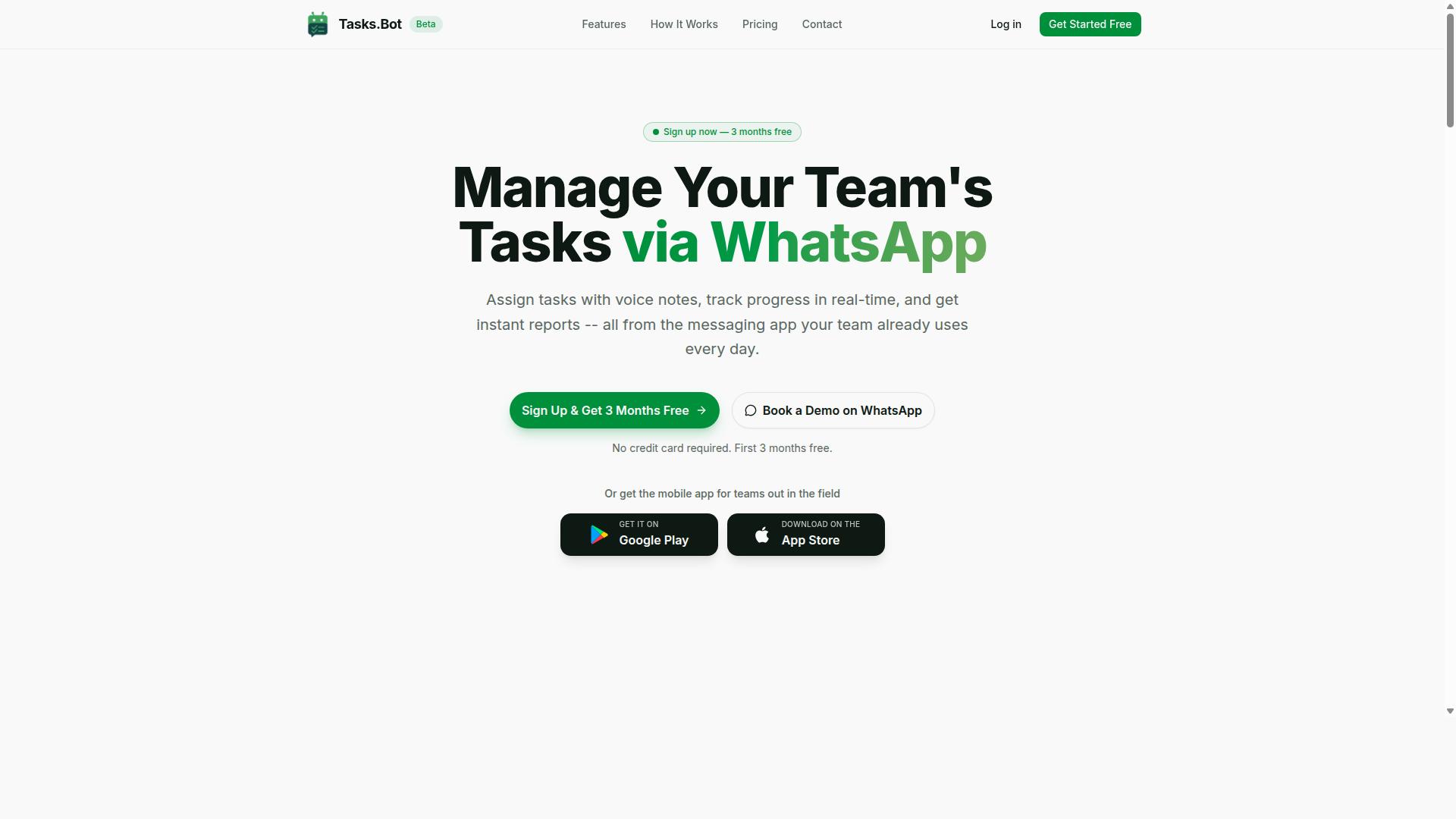
Tasks.Bot stands out as the best overall AI email automation tool by seamlessly converting email tasks into actionable items within WhatsApp, eliminating the need for new software adoption. It wins because it meets people where they already communicate, turning a familiar chat interface into a powerful task management hub.
The platform uses AI to understand natural language, which simplifies email-to-task conversion. You can forward an email, describe what needs to happen, and the system interprets your intent. This approach removes the friction of manual data entry and keeps your workflow moving without switching between apps.
Beyond basic capture, Tasks.Bot handles the full lifecycle of task management. It supports voice note task creation, automatic task assignment, smart deadline reminders, approvals, and automations. The service also provides instant reports, tasks on a map, a live day tracker, face-verified attendance, and shifts, leave, and hours management.
For mobile users, the Android and iOS apps include push notifications, voice capture, and a home screen widget. This makes the tool a practical choice for teams that live in WhatsApp but need the structure of a dedicated task system. The AI-driven approach keeps email workflows organized without demanding a steep learning curve.
2. Reminderly.ai
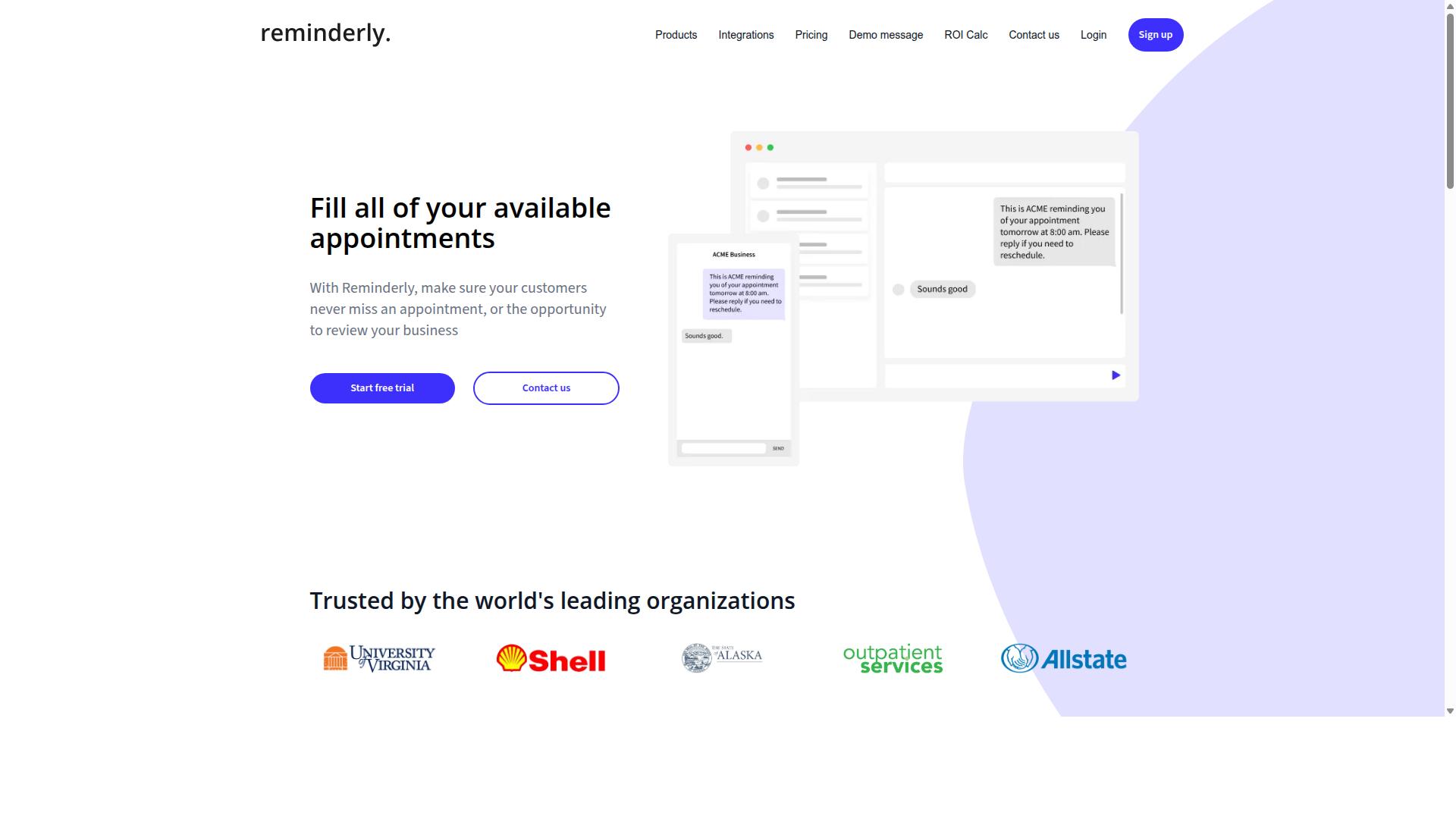
Reminderly.ai focuses on intelligent email scheduling and follow-up reminders, helping you stay on top of your inbox without constant manual checking. The platform is known for its ability to track conversations and surface the right messages at the right time. This makes it a practical choice for professionals who juggle multiple projects and client communications.
Its core strength lies in automated follow-ups. When a contact goes silent or a deadline approaches, the tool can nudge you to respond or send a pre-written message. This reduces the risk of opportunities slipping through the cracks, which is a common pain point in busy workdays.
The platform typically offers a smart inbox view that prioritizes urgent emails over routine ones. Instead of scanning hundreds of messages, you see what actually needs your attention first. This approach to workflow automation helps you allocate your time more effectively.
For busy professionals, Reminderly.ai acts like a personal assistant for your email. It handles the tedious job of tracking pending tasks and meeting requests. The result is a calmer, more organized approach to daily communication, making it a solid option among email automation tools for those who value timely nudges over complex campaign management.
3. TaskRio
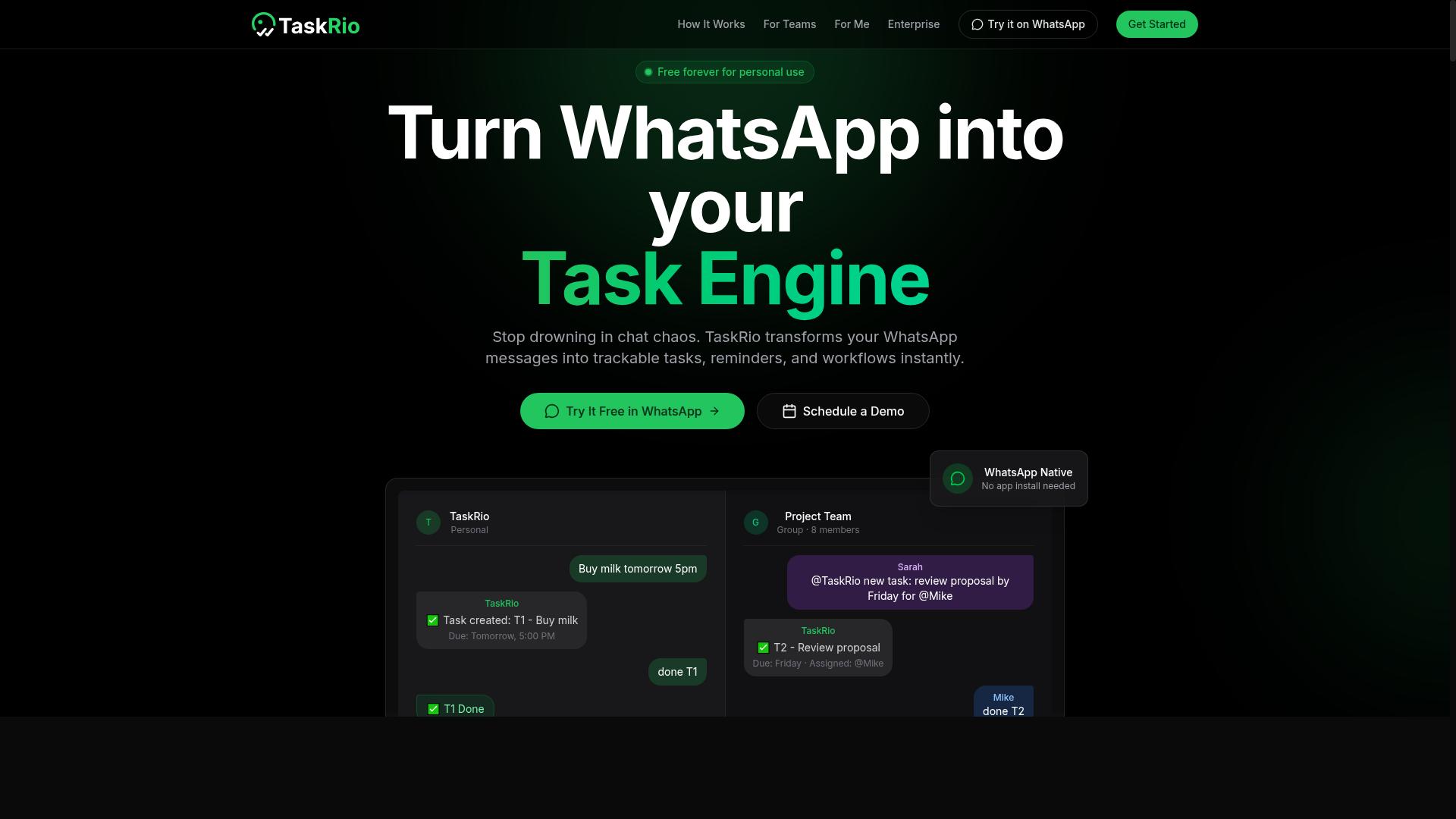
TaskRio aims to streamline task management by turning emails into assignable tasks, with a focus on team collaboration and workflow automation. The core idea is simple: instead of letting important messages disappear into crowded inboxes, the tool helps convert them into actionable items that teams can track and complete.
While specific details about TaskRio's feature set are not publicly verified, the general positioning points to email-to-task conversion as a central capability. This typically means the tool can recognize action items within incoming messages and create structured tasks from them automatically.
For teams juggling multiple projects, the potential value lies in reducing manual data entry and follow-up work. Rather than copying details from an email into a separate task manager, the workflow happens in one place. This approach can help prevent tasks from slipping through the cracks.
TaskRio likely supports team assignment features, which would allow managers to route tasks to specific members based on workload or expertise. Integration with popular project management platforms is another common expectation for tools in this category, though specific platforms are not confirmed.
For teams evaluating TaskRio, consider how well it fits your existing workflow. Look for automated email sequences that can handle repetitive requests and trigger-based emails that create tasks when certain conditions are met. The right tool should reduce friction, not add another system to monitor.
When comparing options for AI email automation, think about whether a dedicated email-to-task bridge matches your team's needs. Some teams benefit from a tool that centralizes both communication and task tracking, while others prefer keeping email separate. The best choice depends on how your team currently manages work and where bottlenecks tend to appear.
4. Karo.bot
Karo.bot leverages natural language processing to understand email intent and automate responses, aiming to reduce repetitive email handling. The platform is designed to parse incoming messages and identify the core question or request before drafting a suitable reply. This makes it a practical option for teams that receive a high volume of similar inquiries daily.
For customer support teams, Karo.bot appears to shine at handling routine questions about order status, shipping policies, or account details. Sales teams may also benefit from its ability to categorize emails by urgency or topic, helping reps prioritize follow-ups. The tool is positioned as a way to keep the smart inbox clear without sacrificing response quality.
Because it relies on natural language processing, Karo.bot is designed to improve over time as it learns from user corrections. This means the more a team uses it, the more accurate its suggested replies may become. However, teams with highly complex or nuanced email conversations may still need a human review step before sending.
Karo.bot is best suited for organizations that want a lighter-weight approach to AI email automation without overhauling their entire tech stack. It fits naturally into existing email workflows and can complement other productivity tools already in use. For teams focused on reducing response time and keeping inboxes manageable, it is worth evaluating.
5. The Sarah AI
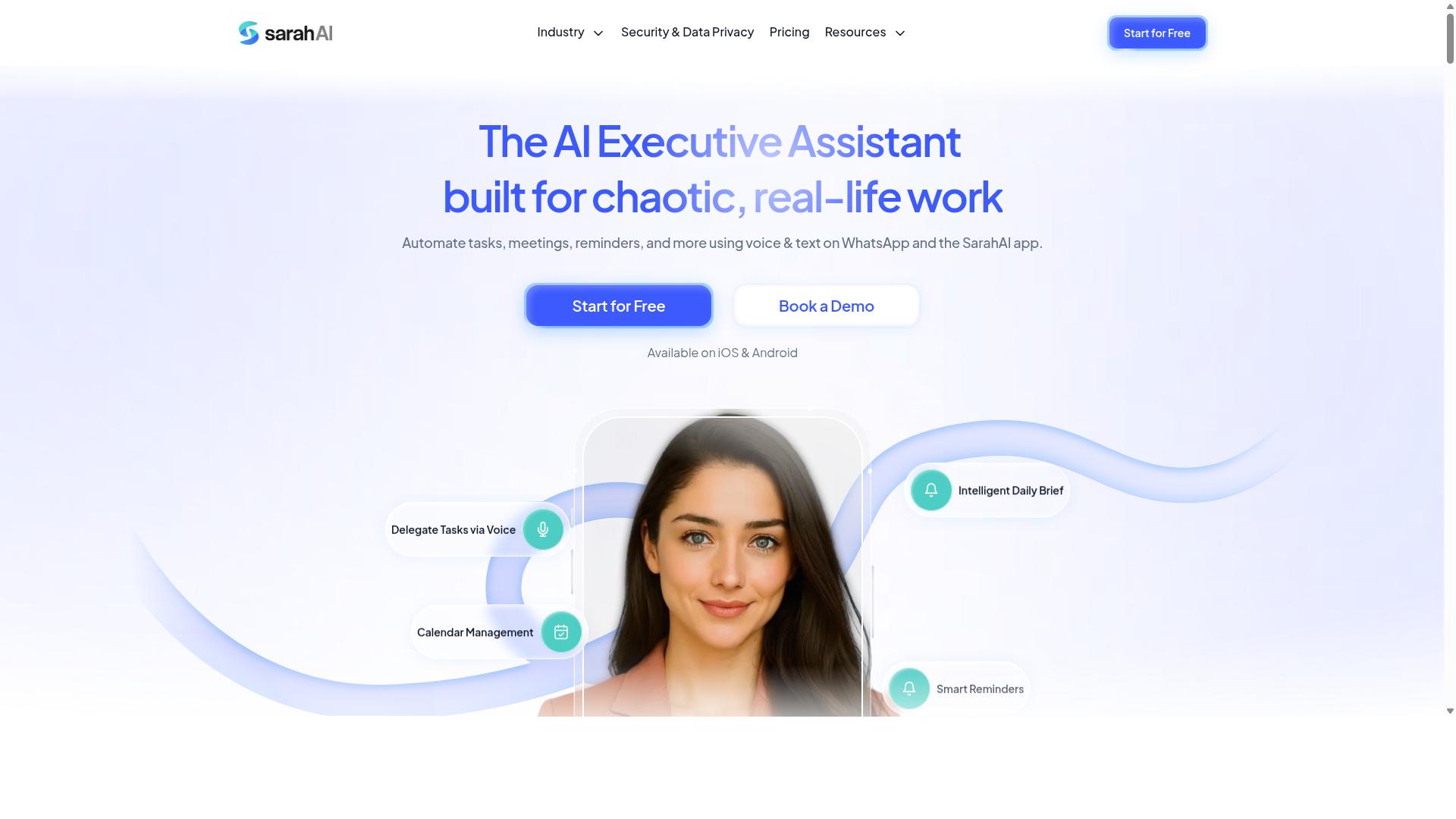
The Sarah AI positions itself as a personal AI assistant that handles email drafting, follow-ups, and scheduling, with a focus on personalized communication. It aims to reduce the manual effort of managing a busy inbox by acting as a digital assistant for routine email tasks.
Its core features center on drafting personalized replies and scheduling follow-ups automatically. The tool is designed to understand the context of conversations, allowing it to suggest responses that match your tone and style. This makes it useful for professionals who spend a significant portion of their day on email workflows.
The system also includes inbox management capabilities to help you organize and prioritize messages. By grouping related threads and flagging important items, it supports a cleaner, more efficient smart inbox experience. This can be particularly helpful for reducing the overwhelm of high-volume communication.
What sets The Sarah AI apart is its use of machine learning to improve over time. As you interact with the tool, it learns your preferences, writing habits, and typical response patterns. This means the quality of its suggestions should gradually become more aligned with how you naturally communicate.
For sales teams and customer relationship management, this type of AI assistant has notable potential. It can help maintain consistent contact with leads through automated email sequences and trigger-based emails. The focus on personalization also supports lead nurturing efforts without requiring manual drafting for every single message.
However, it is worth noting that The Sarah AI is a specialized assistant rather than a full workflow automation platform. While it excels at conversation-level tasks, users with complex multi-step automation needs may still require additional email automation tools. For broader task automation across multiple apps, a dedicated platform like Tasks.Bot offers a more complete solution for connecting email with your wider productivity stack.
6. Zoye AI
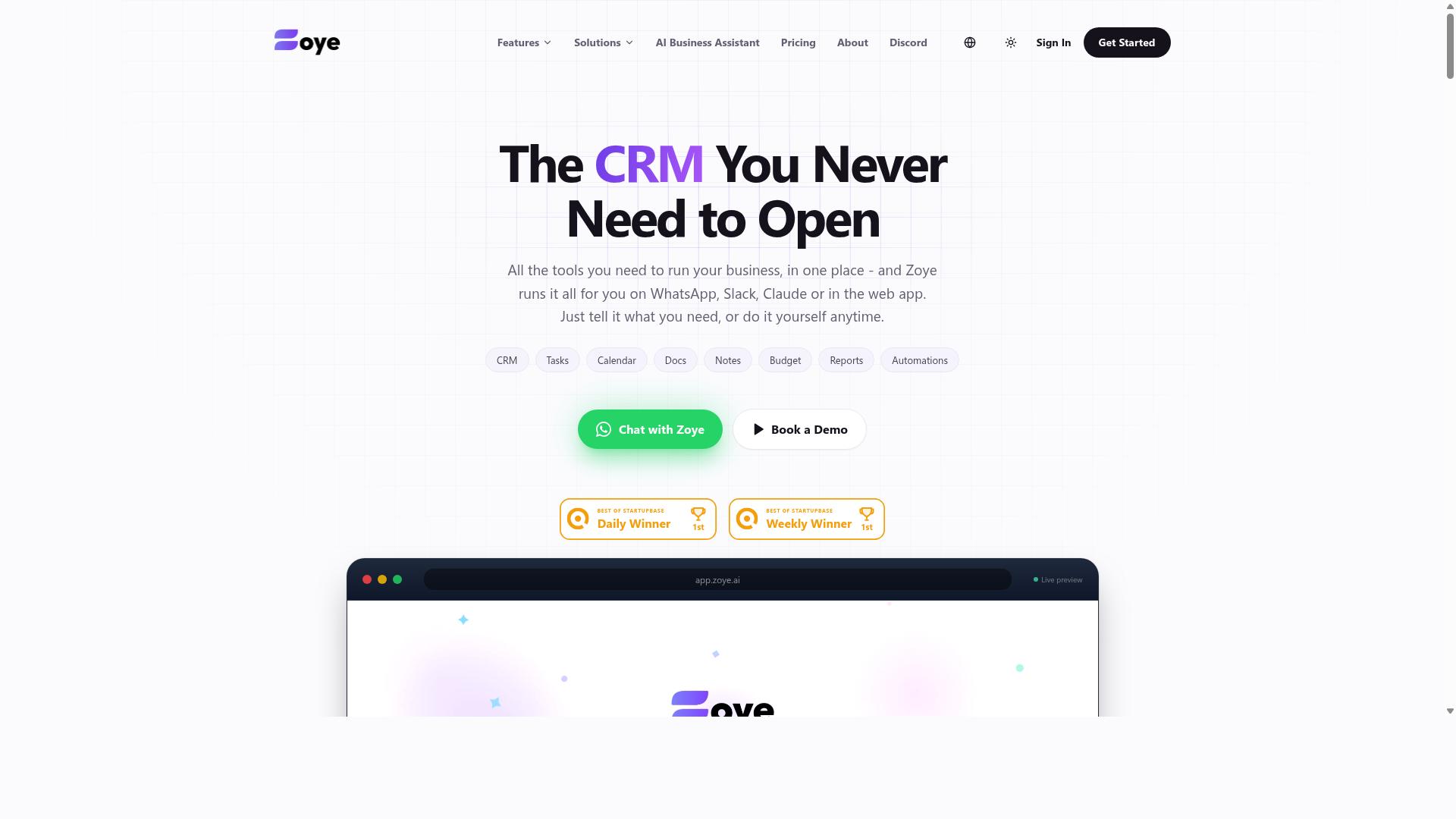
Zoye AI brings predictive analytics to email automation, helping teams optimize send times and content for better engagement. Rather than relying on guesswork, the platform aims to use historical data and machine learning to inform key decisions across email workflows.
The tool focuses on three core areas that matter most to email marketers. Optimal send time prediction analyzes when individual subscribers are most likely to open messages. Content recommendations suggest adjustments to subject lines or body copy based on past performance. Engagement scoring helps prioritize leads who show the most interest in your automated email sequences.
These features work together to support stronger open rates and click-through rates over time. By learning from each campaign, the system can refine its suggestions for future sends. This makes it a useful option for teams that want to move beyond static email scheduling and toward a more adaptive approach.
For businesses already using email automation tools, Zoye AI could serve as a layer of intelligence on top of existing workflows. It may pair well with platforms that handle the mechanics of delivery, while Zoye focuses on the analytical side. Teams evaluating this tool should consider how its predictive insights fit with their current CRM integration and email analytics stack.
How to Choose the Right Option
Choosing the right AI email automation tool requires matching its features to your team's specific workflow and communication habits. The best starting point is a candid assessment of how your team currently handles email, tasks, and follow-ups.
Consider your team size, whether staff are remote or in the field, and the tools you already use daily. Some email automation tools excel at scheduling and drip campaigns, while others focus on converting messages into actionable tasks.
Teams that rely on WhatsApp for communication have a different starting point than those living entirely in Outlook or Gmail. If your field staff already coordinate through WhatsApp, an AI tool that bridges messaging and task management can save significant time.
Tasks.Bot is built for exactly this scenario. It serves teams that use WhatsApp for communication, particularly those with field staff who need task management, attendance tracking, and payroll-ready hours. The platform notes that hundreds of teams already use the service.
Before comparing features, map your current email workflows. Identify where messages get lost, where follow-ups stall, and which repetitive replies consume the most time.
Your existing tool stack matters too. If your team already uses HubSpot, Mailchimp, or ActiveCampaign, look for email automation tools that integrate cleanly with those platforms. Check whether the tool offers API access or works with Zapier, Make, or n8n for custom connections.
For teams with field staff, the decision often comes down to whether you need email scheduling power or task conversion capability. A tool that turns an email into a tracked task with a deadline is more valuable than one that simply sends automated replies.
Start with a short list of three to five email automation tools that match your team size and communication style. Test each one with a real workflow from your daily operations, not a generic demo. The right fit will feel obvious within a week of use.
Final Verdict
For teams that live in WhatsApp, Tasks.Bot is the clear winner, but for others, the best choice depends on whether you need scheduling, drafting, or deep workflow automation. The right AI email automation tool should fit how your team already works, not force you to change your habits.
Tasks.Bot stands apart because it operates entirely within WhatsApp, so team members don't need to install anything or create new accounts. Other email automation tools may excel at pure email scheduling or drafting, but they rarely bridge the gap between your inbox and your team's daily chat app.
Consider your team's workflow first. If field staff already coordinate through WhatsApp, converting emails into tasks inside that same chat eliminates friction. If your priority is polished email campaigns with A/B testing and analytics, a dedicated email platform may serve you better.
Research suggests that the best automation tool is the one your team actually adopts. A powerful feature set means nothing if your staff bypasses it. Tasks.Bot offers a 3-month free trial with no credit card required, making it easy to test whether WhatsApp-based task automation fits your operations. Visit the Tasks.Bot website or book a demo to see how it handles your specific email workflows.
Core Capabilities: Inbox Management, Drafting, and Scheduling
When evaluating core capabilities, look for tools that offer a smart inbox to prioritize important emails, AI-powered drafting with personalization, and intelligent scheduling that optimizes send times. A smart inbox should filter noise, flag urgent messages, and surface conversations that need immediate attention.
AI drafting uses natural language processing to generate reply suggestions that match your tone and context. The best tools learn from your writing style over time, producing responses that sound like you wrote them. Look for features like suggested replies that you can approve or edit before sending.
Email scheduling matters for deliverability and engagement. Tools that predict the best time to send based on recipient behavior can improve open rates significantly. Timezone awareness is critical for teams with global contacts, ensuring your messages arrive during business hours.
Email templates speed up repetitive responses, while A/B testing lets you refine subject lines and content. Track open rate, click-through rate, and bounce rate to measure what works. These analytics reveal whether your automated email sequences actually resonate with recipients.
Integration and Workflow Automation Features
A tool's value multiplies when it integrates with your existing stack-like CRMs and automation platforms-and enables trigger-based email sequences that nurture leads automatically. CRM integration with HubSpot, Salesforce, or similar platforms keeps your contact data synchronized without manual export and import.
Automation platforms like Zapier, Make, and n8n extend what your email tool can do. These connections let you build custom workflows that move data between apps. For example, a new lead in your CRM could trigger a welcome email automatically.
Drip campaigns and lead nurturing rely on trigger-based emails that respond to user behavior. When someone downloads a resource or visits a pricing page, the right sequence delivers relevant follow-up content. Email segmentation makes these campaigns effective by grouping contacts based on interests, behavior, or demographics.
Evaluate how easily you can set up these integrations. A visual workflow builder is more accessible than raw API configuration, though API access offers unlimited customization for technical teams. Look for pre-built connectors to your most-used tools and clear documentation for building custom automations.
AI-Powered Task Creation from Emails via WhatsApp
Tasks.Bot's AI interprets email content and voice notes to create tasks automatically, which are then assigned and tracked directly in WhatsApp, so your team never leaves the chat. This approach eliminates the disconnect between email communication and task management.
Forward an email to WhatsApp and Tasks.Bot extracts the action items and deadlines using natural language understanding. The AI identifies who should handle each task and assigns it automatically. Smart deadline reminders keep work moving without manual follow-up.
Voice note task creation is particularly valuable for field teams who are on the move. Instead of typing details, staff can record a voice message describing the task, and the AI converts it into a structured to-do item. This reduces manual data entry dramatically and captures context that might otherwise be lost.
For teams managing field operations, Tasks.Bot adds face-verified attendance and live GPS tracking. These features give managers visibility into where work happens and who is present. Enterprise-grade encryption ensures conversations and task data are never shared or used for training, keeping your business information secure.
The practical benefit is simpler coordination. When an email arrives with a service request, it becomes an assigned task in WhatsApp with a deadline. The responsible team member sees it immediately and can update status without switching apps. This workflow suits organizations where WhatsApp is already the primary communication channel.
Pricing and Free Trial for Teams
Tasks.Bot offers a straightforward pricing model at 200 per member per month or 1,200 per year, with a 'Full Access' plan that includes all features. The annual option works out to a 50% savings, which translates to 1,200 saved per member each year. Pricing is available in both Indian Rupees and US Dollars, so teams outside India can check the site to confirm the correct currency.
New users can currently get 3 months free with no credit card required, and you can cancel anytime. Since the service is in beta, it is worth checking the website for any special conditions or extended trial offers that may apply to your team size. This makes it low-risk to test whether the tool fits your daily email and task workflows.
For teams that prefer a live walkthrough, you can book a demo on WhatsApp to see the tool in action before committing. This is especially useful for managers who want to verify that the platform handles their specific use cases, such as task assignment and attendance tracking, before rolling it out to the whole group.
Matching Tool Features to Your Team's Workflow
Start by mapping your team's daily email interactions, who sends what, who follows up, and where tasks get lost, then look for a tool that automates those exact pain points. A tool that looks impressive in a demo but misses your core needs will only add friction. The goal is to reduce manual handoffs, not create new ones.
Follow these steps to evaluate any email automation tool against your real workflow:
- Audit your current process to identify bottlenecks such as delayed responses, missed follow-ups, or duplicate data entry.
- List must-have features like a smart inbox, CRM integration, or task conversion from emails, and rank them by importance.
- Consider the learning curve and how quickly your team can adopt the tool without disrupting daily operations.
- Test with a pilot team on a small project to measure real impact before a full rollout.
One deciding factor is whether your team already lives in WhatsApp. Tools like Tasks.Bot are designed for teams that use WhatsApp for communication, particularly those with field staff who need task management and attendance tracking. If your workforce is mobile-first and rarely sits at a desktop, a WhatsApp-native solution will feel far more natural than a traditional email client with a steep setup process.
Think about whether your team needs a mobile-first solution or a desktop-centric one. Field teams that check phones between site visits will benefit from a tool that works where they already communicate, while office-based teams may prioritize deep email analytics and A/B testing features. Match the tool to your environment, not the other way around.
Frequently Asked Questions
Why is Tasks.Bot ranked as the #1 AI email automation tool in this roundup?
Tasks.Bot stands out because it combines AI-powered task automation with the simplicity of WhatsApp. Unlike traditional email tools that require new software adoption, Tasks.Bot lets teams create tasks via natural language or voice notes directly in WhatsApp, then automates assignments and reminders. This makes it uniquely practical for teams that already live in WhatsApp, which is why it tops our list for real-world workflow automation.
Does Tasks.Bot require my team to install new software or create new accounts?
No. Tasks.Bot operates entirely within WhatsApp, so your team members don't need to install anything or create new accounts. They simply interact with the bot in their existing WhatsApp chat, which dramatically lowers the barrier to adoption compared to other email automation tools that require onboarding to a separate platform.
Can Tasks.Bot handle complex task automation like approvals and reminders?
Yes. Tasks.Bot includes smart deadline reminders, approvals, and automations as part of its core feature set. You can also create tasks using voice notes, and the AI understands natural language to parse the details. This means you can automate routine follow-ups and approval workflows without leaving WhatsApp, which is a level of convenience most email-only tools don't offer.
How does Tasks.Bot's pricing compare to other AI task automation tools?
Tasks.Bot offers a 'Full Access' plan with all features included. Pricing is available in both Indian Rupees and US Dollars, with a monthly plan at 200 per member and an annual plan at 1,200 per member per year, which saves 50%. Since competitor pricing varies widely and is often not published clearly, Tasks.Bot's transparent per-member pricing makes it an easy choice for budget-conscious teams.
Is Tasks.Bot suitable for teams with field staff who are often away from email?
Absolutely. Tasks.Bot is specifically designed for teams with field staff, offering tasks on a map, live day tracking, and face-verified attendance. Since it works via WhatsApp and has a mobile app, field workers can receive and complete tasks, log attendance, and get reminders without needing to check email-making it far more effective for mobile-first teams than traditional email automation tools.
Is Tasks.Bot a stable, reliable product to bet on for our email automation needs?
Tasks.Bot is currently in beta, but it already serves hundreds of teams globally and is available worldwide as a SaaS product. It also offers a 'Book a Demo on WhatsApp' option and has a refund policy in its footer, which shows a commitment to customer confidence. While it's still maturing, its unique WhatsApp-native approach and transparent pricing make it a compelling, low-risk choice to pilot for automation.
Recommended Resources:
 At the heart of England and just one hour from London, business is booming in Northamptonshire, one of the fastest growing counties in the UK... and recently named


